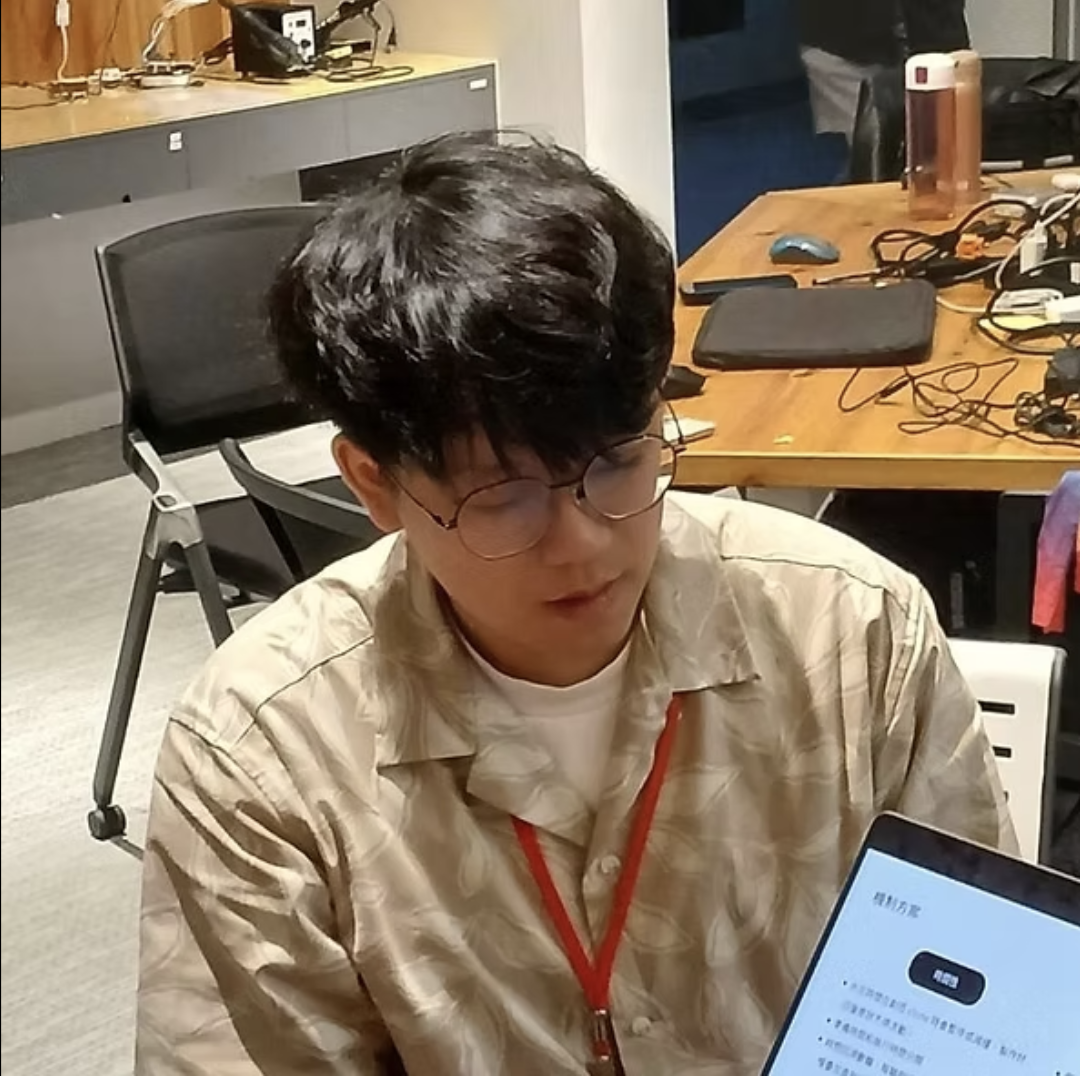
Chih-Hao Hsu 許智皓
National Taiwan University · Dept. of Computer Science & Information Engineering
I'm an undergraduate researcher, currently interning at LINE Taiwan's Data Dev Team. Previously, I served as an AI Safety Research Fellow at Algoverse. I'm actively seeking PhD opportunities and always open to conversations or collaborations.
News
One paper accepted to IEEE ISMAR.
Two papers accepted to the ICML Mechanistic Interpretability Workshop.
One paper accepted to ACL Findings.
Starting as an AI Safety Fellow at Algoverse, mentored by Anusha Mujumdar.
Interning at LINE Taiwan Data Dev Team.
Starting as a Research Assistant at Academia Sinica, advised by Prof. Yu-Te Wang.
Research Interests
Broadly speaking, my research interests span two dimensions: from biological to artificial intelligence, and from understanding how these systems work to exploring how they interact with and influence each other.
Understanding the brain through neural activity and behavior.
Enabling neural interfaces for interaction and cognitive augmentation.
Understanding representations and internal computations in AI systems.
Studying how AI interacts with humans and other agents to be helpful, reliable, and capable.
NeuroAI for AI Safety captures a lot of what motivates me: the idea that the brain offers a blueprint for safer, more aligned AI systems, and that this pursuit can advance research in both fields. Recently, I've steered this broad interest toward more pragmatic directions, especially where the stakes feel urgent or the results would be genuinely helpful.
Applications of Interpretability: Using interpretability tools to audit and steer AI systems, asking how understanding internal representations can enable better interactions and help correct unsafe behaviors.
Real-World Wearable BCI: Developing prototypes that move beyond lab settings and are useful in everyday life, asking how paradigms such as SSVEP can best be leveraged on wearable platforms like AR glasses.
Both threads share one aim: turning insights about these complex intelligent systems into something practical.
Beyond these main threads, I still sometimes pursue curiosity-driven questions, such as how similarly the brain and AI models process information, or whether particular human-like abilities emerge in AI models beyond a certain scale. I also enjoy picking up new skills and knowledge across the quadrants of the map above. For example, I have been drawn to robotics, since biological intelligence is inherently embodied, and I believe there is much to learn from that.